
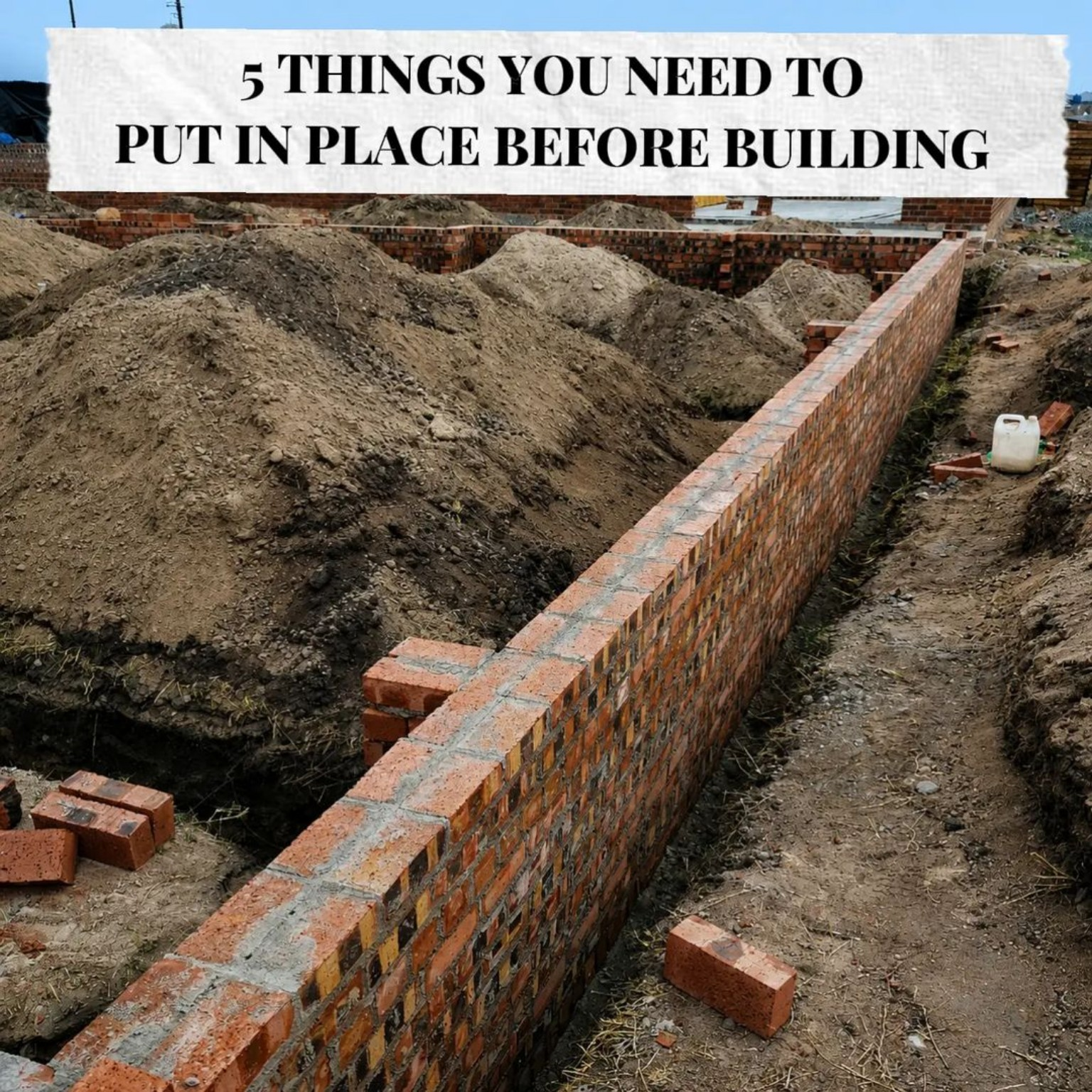
5 Preliminaries Often Overlooked When Building in Zimbabwe
When most people think about building a house in Zimbabwe, the first things that come to mind are bricks, cement, sand, roofing and finishes.
But before the actual structure starts taking shape, there are several important site preliminaries that need to be planned and budgeted for.
These items may look small compared with the cost of the house itself, but overlooking them can lead to delays, poor site organisation, security problems and unexpected expenses during construction.
Whether you are building in Harare, Ruwa, Chitungwiza, Goromonzi, Mazowe or another part of Zimbabwe, these are some of the preliminary requirements you should think about before construction gets fully underway.
1. Site Cabin or Temporary Storage
A site cabin or temporary storage structure is one of the most useful facilities to have on a construction site.
It provides a secure place to store items such as:
- Tools and equipment
- Cement
- Small construction materials
- Safety equipment
- Site records and documents
- Personal belongings for workers
Construction materials are expensive, and leaving them exposed can result in theft, damage or unnecessary wastage.
Cement, in particular, must be kept dry and protected from rain and moisture. Tools and smaller items also need to be organised so that workers can easily access them when required.
A proper site cabin helps create a more organised working environment and can also serve as a base for the person responsible for site security.
For homeowners managing projects themselves, temporary storage should be planned before the first major delivery of materials arrives on site.
Cost Planning Tip
When budgeting for temporary storage, consider the cost of the structure itself, transport to site if it is prefabricated, locks, shelving and eventual removal or reuse after construction.
A cheaper temporary structure may work for a short project, while a longer construction period may justify something stronger and more secure.
2. Water Tank and Reliable Water Supply
Construction requires a significant amount of water.
Water is used for activities such as mixing concrete, mortar and plaster, curing concrete, cleaning tools and controlling dust on site.
Workers also need access to clean drinking water.
Depending on the location of your property, relying entirely on council water or an irregular water supply can cause major delays.
Having a water tank on site provides a buffer and allows construction work to continue even when the normal water supply is interrupted.
The size of the tank required will depend on the scale of the project, availability of water in the area and the construction activities taking place at the time.
For projects in areas where water is difficult to access, homeowners should also consider the cost of water delivery when preparing their construction budget.
Running out of water during activities such as concrete casting can seriously disrupt the day’s work, so water planning should not be treated as an afterthought.
Cost Planning Tip
Do not budget only for the water tank. Also consider the cost of filling it, water deliveries, hoses, taps, pumps where required and moving or securing the tank on site.
If the area has unreliable water, regular water deliveries can become a noticeable construction expense over the life of the project.
3. Temporary Toilet for Workers
A temporary toilet is another preliminary that is easily overlooked.
Construction workers may spend several hours on site every day, and suitable toilet facilities should be available throughout the project.
Providing a temporary toilet helps maintain hygiene, cleanliness and a more professional working environment.
Depending on the site and stage of construction, this could involve a portable toilet, temporary sanitation arrangement or another appropriate facility.
The important point is that sanitation should be planned before workers begin spending full working days on the property.
Apart from improving working conditions, proper sanitation also helps keep the surrounding property and neighbouring areas clean.
It is a relatively small part of the construction budget but can make a significant difference to how professionally the site is managed.
Cost Planning Tip
Allow for the installation, hire or construction of the temporary facility as well as cleaning, servicing and maintenance throughout the project.
The longer the construction period, the more important it becomes to budget for ongoing sanitation rather than only the initial setup.
4. Site Security
Construction sites contain valuable materials.
Bricks, cement, steel reinforcement, electrical materials, plumbing fittings, tools and other building materials can quickly add up to thousands of dollars.
This makes site security an important consideration from the beginning of the project.
Depending on the location and size of the development, security may include:
- A security guard
- Secure storage
- Temporary fencing
- Controlled access to the property
- Site lighting
- Regular stock checks
A security person may stay on site, particularly once valuable materials and equipment begin arriving.
The site cabin can also serve as a base for the security person where appropriate.
Homeowners should avoid ordering large quantities of expensive materials before suitable storage and security arrangements have been made.
Good site security is not only about preventing theft. It also helps control who enters the property and reduces the risk of materials being misplaced or used without proper monitoring.
Cost Planning Tip
Security is usually an ongoing expense rather than a once-off cost.
When preparing your budget, consider guarding costs, lighting, fencing, locks and any additional measures required as more valuable materials arrive on site.
It may cost money to secure the site, but replacing stolen cement, steel, tools or fittings can cost significantly more.
5. Site Assessments and Council Inspections
Site assessments and inspections form an important part of the construction process.
Building a house is not simply a matter of obtaining approved plans and then constructing everything without further checks.
Depending on the relevant local authority and type of project, inspections may be required at different stages of construction.
These may include stages such as setting out, foundations, substructure, concrete work, drainage, superstructure and final completion.
The purpose of these inspections is generally to check that construction is progressing in accordance with the approved plans and applicable requirements.
Homeowners should also remember that inspection-related fees may apply.
These costs are often forgotten when people prepare an initial construction budget.
Before starting your project, confirm with the relevant local authority:
- Which construction stages require inspection
- How inspections must be booked
- What documents need to be available on site
- What inspection fees apply
- How much notice the inspector requires
Planning for inspections helps prevent situations where work has to stop while waiting for approval to proceed to the next stage.
Cost Planning Tip
Your budget should allow for inspection fees, transport or administrative charges where applicable and the possibility of additional costs if an inspection has to be repeated.
It is also wise to keep a small contingency for council-related expenses that may arise during the project.
How Much Should You Budget for Construction Preliminaries?
There is no single amount that applies to every building project in Zimbabwe.
The total cost will depend on factors such as:
- Location of the site
- Duration of construction
- Size of the project
- Availability of water and electricity
- Security requirements
- Distance from suppliers
- Local authority requirements
- Whether facilities are hired, purchased or constructed temporarily
Instead of treating preliminaries as miscellaneous expenses, create a separate section for them in your construction budget.
A simple preliminary budget can include:
- Site establishment
- Temporary storage
- Water tank and water supply
- Temporary sanitation
- Security
- Temporary fencing
- Site electricity where required
- Council inspections
- Site signage
- Cleaning
- Waste removal
- Small tools and safety equipment
- Contingency
This gives you a more realistic picture of what it will actually cost to get construction underway and keep the site operating.
Pre-Construction Checklist for Homeowners in Zimbabwe
Before your contractor or building team starts work, run through this checklist:
Documents and Approvals
☐ Building plans are approved where required
☐ Property or lease documents are in order
☐ Council requirements have been confirmed
☐ Required permits have been obtained
☐ Inspection stages have been identified
Site Preparation
☐ Building position has been confirmed
☐ Site access is available for trucks and deliveries
☐ Site has been cleared where necessary
☐ Temporary storage or site cabin is available
☐ Materials can be stored safely
Water and Sanitation
☐ Reliable construction water is available
☐ Water tank is installed if necessary
☐ Drinking water arrangements are available
☐ Temporary toilet facilities are in place
Security
☐ Site security arrangements are in place
☐ Valuable materials have secure storage
☐ Access to the property can be controlled
☐ Lighting or guarding has been considered
Money and Project Management
☐ Construction budget has been prepared
☐ Preliminaries have been included in the budget
☐ Labour costs are clearly agreed
☐ Material procurement responsibilities are clear
☐ Council and inspection costs have been considered
☐ A contingency amount has been allowed for unexpected expenses
If you can comfortably tick these items before construction begins, your site is far better prepared for the work ahead.
Why Construction Preliminaries Matter
Preliminaries may not become part of the finished house, but they play an important role in getting the house built properly.
A well-managed site needs water, storage, sanitation, security and proper coordination with the relevant authorities.
These costs should therefore be included in the construction budget from the beginning rather than treated as unexpected expenses later.
If you are comparing quotations from contractors, also check whether site preliminaries are included or whether you will be expected to provide them separately.
A quotation that appears cheaper may not necessarily be cheaper if important site requirements have been excluded.
Budget for the Site, Not Just the Building
One of the biggest mistakes homeowners can make is budgeting only for the physical structure.
Before construction begins, ask yourself:
Do we have secure storage?
Is there enough water?
Where will workers access toilet facilities?
Who will protect materials when nobody is working?
What inspections and council fees will be required?
Who is responsible for each of these costs?
Answering these questions early can make the construction process much smoother.
Good construction starts with good preparation.
Planning to Build in Zimbabwe?
LimeGlow Construction provides residential and commercial construction services in Zimbabwe, helping clients manage projects from planning through to completion.
Our services include architectural plans, BOQs, quantity surveying, project management, turnkey construction, labour-only construction, renovations, extensions and general building works.
With proper site planning, organised construction management and experienced professionals involved from the beginning, homeowners can avoid many of the problems that normally arise from poor preparation.
Hi, this is a comment.
To get started with moderating, editing, and deleting comments, please visit the Comments screen in the dashboard.
Commenter avatars come from Gravatar.